In this article
- Separate receiving information from sending it.
- Check the feature that actually matters.
- Test it in the room where you will use it.
- Keep the plan small enough to remember.
- Three features that sound similar but do different jobs
- Run a reception and power check before a storm
- Build a second path for information and a separate path for contact
Source-based guide created with AI assistance. Calculations are illustrative; equipment selections are researched, not hands-on tests. How we work.
Separate receiving information from sending it.
A weather radio receives broadcasts. It does not call for help, send your location or let family know you are safe. A charged phone remains useful for those tasks when service is available. Plan both directions: a way to receive official information and a way to contact someone outside your immediate area. A whistle has a much narrower role as a nearby sound signal.
Check the feature that actually matters.
Receiving a NOAA weather channel is not the same as automatically sounding an alert while you sleep. Read the exact receiver manual for alert behavior, standby power and whether it supports location-based SAME programming. The National Weather Service explains receiver features, including battery backup and accessible alerting options. Do not assume every emergency radio offers the same functions. Read NWS receiver guidance.
Test it in the room where you will use it.
Find your local broadcast and test reception at home before a storm. Building materials and location affect reception. Practice switching power sources and tuning the radio with the people who will use it. Keep its charging cable or approved spare batteries with it. Small hand-crank or solar features are worth testing before relying on them as the main charging method.
Keep the plan small enough to remember.
Write down a family contact and the official local information sources you use. Choose a regular check-in arrangement rather than assuming every person will see the same app. A radio is one useful backup, not a promise of uninterrupted coverage. These NOAA examples are for US use; travelers should check the destination’s warning and broadcast systems.
Three features that sound similar but do different jobs
The shopping question is whether you want to listen on demand, be alerted automatically, or limit alerts to selected areas. A listing that says “NOAA” answers only part of that question. The National Weather Service receiver guide explains these distinctions and accessible alerting options. Use the exact manual to confirm how a particular model behaves.
| Feature | What it helps with | What to verify |
|---|---|---|
| Weather-band reception | Listening to a local NOAA broadcast | A usable signal where you intend to keep the radio |
| Automatic alert operation | Getting your attention without continuous listening | Required mode, volume behavior and standby power |
| SAME programming | Selecting supported counties or areas for alerts | Exact model support and correct local codes |
For example, someone wanting bedside alerts for one county has a different requirement from someone wanting a portable radio to check conditions at a shelter. Do not assume a portable crank radio supports county filtering. If hearing an alarm is difficult, investigate compatible visual or tactile alert accessories before selecting the receiver.
Run a reception and power check before a storm
Write down your county, transmitter and usable channel from official NWS information. Tune the radio at its intended location, then try another safe position if reception is poor. A successful test beside a window does not prove it will work inside a cupboard. Keep the antenna and controls accessible, and let other household members repeat the procedure.
- Confirm that you can hear a clear broadcast, not just static or an intermittent voice.
- Enable the alert mode exactly as the manual describes and follow the local station’s routine test guidance.
- Switch to the approved backup power source and confirm reception again.
- Record the date, location, channel, power source and any unresolved limitation on a card kept with the unit.
Do not drain the backup battery before bad weather. A hand crank and a small integrated solar panel are supplementary features whose usefulness depends on conditions and the exact device. Check the manual’s charging instructions rather than assuming a few turns will refill a phone. Plan to enter a storm period with the radio already charged.
Build a second path for information and a separate path for contact
A radio broadcast is useful even when your phone cannot load an app, but radio transmitters can also lose service. Keep local emergency management and utility information in your plan, with more than one way to access it. Store phone numbers and a meeting arrangement on paper. A weather receiver cannot send a message back to the broadcaster or tell relatives where you are.
If you already have a suitable receiver, the next useful step is testing and programming it. Replace it only when a needed feature is missing or it cannot serve its intended location. The examples below are research leads; none is a claim of best reception at your address. See the backup-power buying guide for keeping a phone or network device powered, and remember that power alone cannot guarantee network availability.
PUT THE IDEA TO WORK
Equipment to research.
Start with what you already own. These examples cover different roles; you do not need every item. Selections are researched, not hands-on reviews.
As an Amazon Associate I earn from qualifying purchases. We may receive a commission when you buy through these Amazon links. Links open equipment searches on Amazon US; compare actual listing photos, features and sellers.
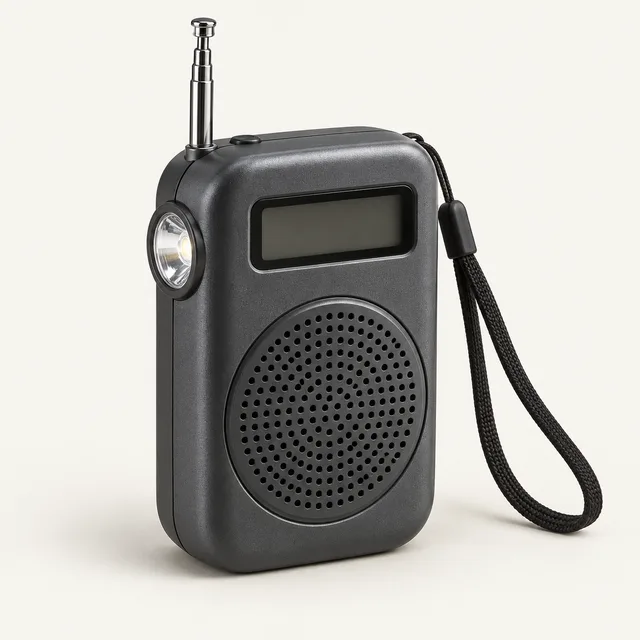 AI illustration · equipment type
Compact travel weather radio
A smaller weather-radio option for a household or travel kit.
Check the fit
NOAA weather channels serve the US and some neighboring areas, not every country.
We may earn a commission.
Equipment search · Amazon US
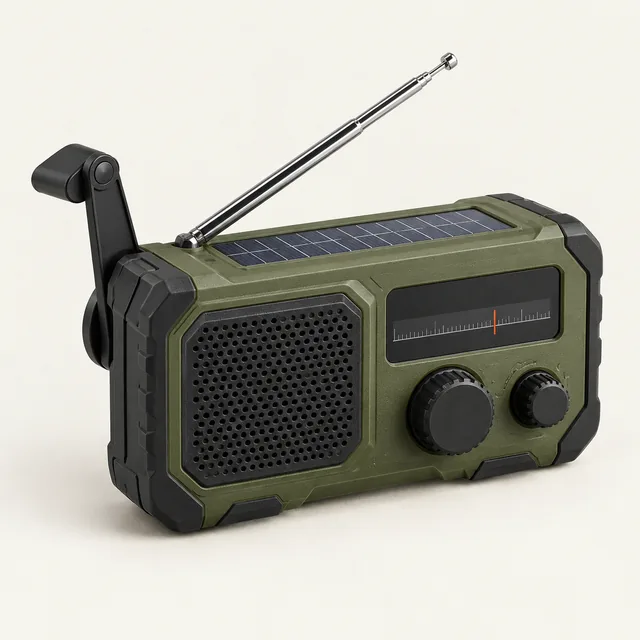 AI illustration · equipment type
Crank-backup weather radio
AM/FM listening and NOAA weather reception in supported regions, with multiple power options.
Check the fit
NOAA weather channels are not global. Elsewhere, choose a receiver for your local broadcast and warning system.
We may earn a commission.
Equipment search · Amazon US
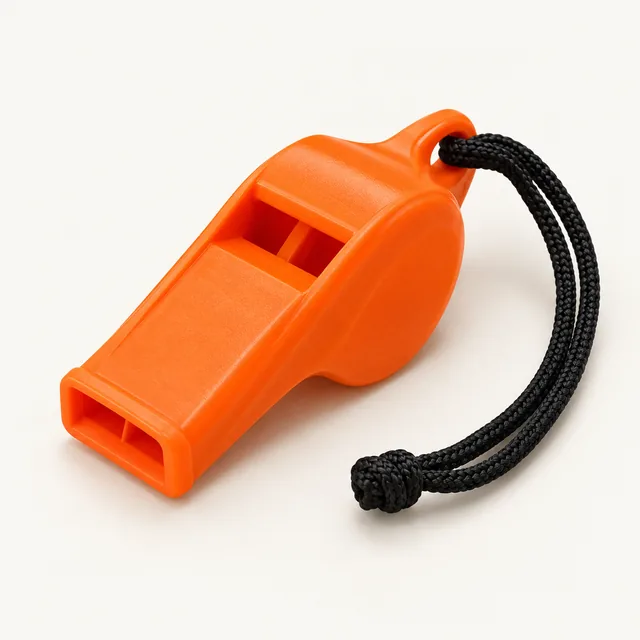 AI illustration · equipment type
Pealess emergency whistle
Keep a simple sound signal within reach in a walking or evacuation kit.
Check the fit
A whistle cannot guarantee someone will hear you. Avoid sounding it close to ears.
We may earn a commission.
Equipment search · Amazon US
Sources & further reading
Editorial guidance, not a local emergency warning. Follow your national and local authorities.